Thursday, October 31, 2013

Happy Halloween 2013!

Happy Halloween 2013, Halloween, halloween greetings, night, halloween, all saints day

This dark cold night, the grave’s delight, the warlocks, werewolves, vampires, and zombies are at their play; Ye think that without… The wild shivering winds shout, But no, it is they – it is they…. Happy Halloween…

Tuesday, October 29, 2013

Burn Tons of Calories While Standing

Burn Tons of Calories While Standing, exercise, diet, burn calories, burn calories standing

Burn Tons of Calories While Standing, exercise, diet, burn calories, burn calories standing

A study shows that you can burn a lot of calories just by standing more in a day that may give you major health benefits instead of sitting.

BBC, Dr John Buckley, and researchers from the University of Chester carry out an experiment by asking ten volunteers who work at an estate agents to stand for at least three hours a day for a week.

The volunteers wore accelerometers which is a movement monitor,  heart rate monitors, and glucose monitors to measure blood sugar levels throughout the day and night.

The researchers noted measurements on when the volunteers are standing, and when they are just sitting. Comparing the two, the data shows striking differences. The blood glucose levels goes down to normal levels after a meal more quickly on the days when they are standing as oppose to when they sit. Also their heart rates remain higher when they are standing, recording about 10 extra beats per minute, that resulted into a bigger calorie burn.

"If we look at the heart rates," Dr. John Buckley said, "we can see they are quite a lot higher actually - on average around 10 beats per minute higher and that makes a difference of about 0.7 of a calorie per minute."

0.7 of a calorie per minute is not that much but if it accumulate, it can get to 42 calories an hour. If you find time to stand everyday for 6 hours, that's 252 calories a day and 1,764 calories a week.

Dr Buckley added that if you consider it as an activity level, "then that would be the equivalent of running about 10 marathons a year. Just by standing up three or four hours in your day at work."

So if you want to burn more, you need to practice doing your work while standing!

Tuesday, October 22, 2013

New Study to Cure Baldness

cure to baldness, Hair loss, loss of hair, cure to hair loss, treatment hair loss, hair loss treatment

A new study shows that it is possible to grow new hair follicles from human skin cells that may cure baldness for both men and women.

Laboratories encountered a lot of difficulties in replicating human hair follicles. But using a new technique shows that it can trigger hair growth in skin tissues.

As an alternative to just transplanting hair follicles from one surface to another which is the norm in hair transplants, the skin tissue of the patient will be used to produce essentially large quantities of follicles for hair-transplant operations, study said.

The researchers believes that the study is a "milestone advance" in stimulating hair growth in people suffering from hair loss.

"This approach has the potential to transform the medical treatment of hair loss," Angela Christiano said. Angela Christiano is a Professor at the Columbia University in New York. She is one of the lead authors of the study published in the journal Proceedings of the National Academy of Sciences.

"Current hair-loss medications tend to slow the loss of hair follicles or potentially stimulate the growth of existing hairs, but they do not create new hair follicles. Neither do conventional hair transplants, which relocate a set number of hairs from the back of the scalp to the front. Our method, in contrast, has the potential to actually grow new follicles using a patient's own cells. This could greatly expand the utility of hair-restoration surgery to women and to younger patients - now it is largely restricted to the treatment of male-pattern baldness in patients with stable disease," she added.

The treatment could make hair transplantation available to people with a small number of follicles, which includes patients with female-pattern hair loss, scarring alopecia and hair loss due to burns.

The new study results were published here.

Monday, October 7, 2013

Do you have IBS and want to get rid of it?

IBS, diarrhoea, Probiotics, irritable bowel syndrome

IBS or irritable bowel syndrome is a common disorder of the digestive system that causes abdominal pain and cramping, changes in bowel movements, diarrhea, constipation, and other symptoms.

Probiotics are great options for treating IBS.

Our intestines are filled with different kinds of bacteria and they are called collectively as gut flora. They all get along with each other when you are healthy but oftentimes they are disturbed that results to unpleasant gastrointestinal symptoms. There are a lot of reasons for it, like stomach flu or side effect of antibiotics.

“The thought is that if you can restore a balanced intestinal flora in somebody with IBS, you may be able to eliminate the symptoms. So a better biome may mean a better life,” explained Cmdr. Patrick E. Young, USN, a gastroenterologist at Walter Reed National Military Medical Center in Bethesda, Md.

Probiotics are “friendly” bacteria because they keep your digestive system healthy and the best studied probiotic in the treatment of IBS is Bifidobacterium infantis. Data shows that it reduces bloating, abdominal pain, and passing of gas, it also ease the bowel movement difficulty and normalize the aberrant peripheral cytokine levels.

Tuesday, October 1, 2013

Will the new "Satisfries" from Burger King Satisfries you?

Satisfries, diet fries, Burger king, McDonalds, french fries

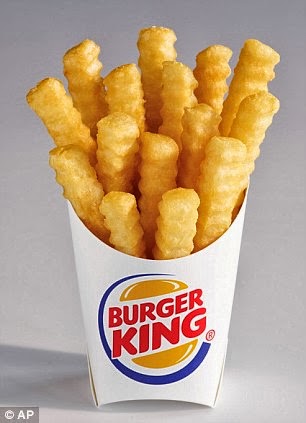
Burger King introduces it's new Diet fries they call "Satisfries" that they claim are 20% healthier and with the same taste as regular fries.

The company said that the newly-designed batter means the potato will absorb less oil. The "Diet" fries are being introduced to the menu at Burger King to attract more health-conscious customers.

The new Burger King "Satisfries" have 20% less calories than regular fries. The small portion of a regular Burger King fries have 320 calories the "Satisfries" have only 270 calories in it.

The company also claims that their diet fries have about 40% less fat and 30% less calories than fries sold by McDonald's.

The "Satisfries" are crinkle-cut so that staff can tell the difference when serving them.

The suggested price for a small order of "Satisfries" is $1.89, while the regular fries cost $1.59.

Thursday, September 26, 2013

Diet Drinks Declining Sales


A Coke advertisement defends the safety of its diet drinks.

The company is faced with declining sales of its sugary and non-sugary drinks has plans to educate the consumers about its diet drinks products particulary about the safety of artificial sweetener "aspartame." "The safety of aspartame is supported by more than 200 studies over the last 40 years," the ad assures consumers.

Sales of diet soft drinks are falling at a faster rate than regular soft drinks in the U.S., according to Beverage Digest. Last year, for example, sales volume for Coke fell 1%, while Diet Coke fell 3%. Pepsi fell 3.4%, while Diet Pepsi fell 6.2%.

The decline in sales is because of negative news about these artificial sweeteners and that no-calorie sweeteners may not help your diet and instead could boost your risk for diabetes, heart disease and extra pounds.

The Food and Drug Administration approved six non-nutritive sweeteners for use in foods and drinks:

aspartame - NutraSweet, Equal
sucralose - Splenda, Nevella
acesulfame potassium - Sunett, Sweet One
saccharin - Sweet'N Low, Sugar Twin
rebaudioside A (stevia extract) - Truvia, PureVia
neotame - used in commercial food products

Despite being approved by FDA everynow and then a research pop-up about the dangers of these sweeteners. The latest study say that artificially sweetened drinks are associated with weight gain in adults and teens, and raise risk for diabetes, high blood pressure and heart disease.

Their reason why artificial sweeteners may trigger weight gain is that if you are given a brownie made with artificial sweetener you are more likely to eat two or three brownies simply because you do not feel they are as bad for you. Sugar-free foods still contain calories in the form of carbohydrates, protein, and or fat. Certain studies have shown that the caloric consumption of foods sweetened with artificial sweetener is similar to that of foods sweetened with sugar, meaning you will not be cutting calories by simply switching to artificial sweetener.

Another thing is compensation, people tend to justify rewarding themself a second slice of pie because you've eliminated hundreds of calories by choosing diet beverages.

Another research says artificial sweeteners flood your taste buds with sweet flavors but don't give your satisfaction centers in your brain the way real sweets do which cause cravings to build.

Artificial sweeteners also may increase your body's response to real sugars and carbohydrates that spike the levels of blood sugar that link them to metabolic syndrome, prediabetes and diabetes. But there are still no slam dunk research that can directly link artificial sweeteners to weight gain, risk for diabetes, high blood pressure and heart disease.


Tuesday, September 17, 2013

Why Avoid Sugar From Your Diet

Robert Lustig MD, UCSF Professor of Pediatrics in the Division of Endocrinology, he explores the damage caused by sugary foods. He argues that too much fructose and not enough fiber appear to be cornerstones of the obesity epidemic through their effects on insulin.

Lustig said that the last 30 years have seen an onslaught of sugar and dwindling of fiber in the food environment which is a deadly combination for consumers who have been duped by the food industry. His 2009 lecture "Sugar: The Bitter Truth," has now been viewed 3,850,000 times on youtube. You can watch the video here: http://www.youtube.com/watch?v=dBnniua6-oM&list=TL8lMbN4dKkvs.

Now he has brought the battle in the supermarket with his new e-book, "Sugar Has 56 Names: A Shopper's Guide." This e-book guide is meant for smartphones or tablets that you can view while shopping your groceries. It provides consumers with a new nutrition label for hundreds of processed foods that concentrate on sugar. From soy milk to sausage, and Sara Lee to supermarket brands, the data delineates the quality and quantity of sugar in products. Why the distinction? Because, as the book's title indicates, sugar goes by varied names - from fructose to fruit juice, and these derivatives differ greatly in how they're processed by the body.

"By paying attention to the sugar portion of the label people can do better in terms of making their own decisions," Lustig says.

Lustig said that it's not just the issue of obesity but the risk of metabolic diseases, which includes diabetes, heart disease, fatty liver disease, cancer and dementia. And sugar, he says, is a big part of the problem.

He gave readers with some interesting directives: don't go to the supermarket hungry; shop along the perimeter of the supermarket where fresh, whole foods abound; if it comes with a logo you've heard of, it's been processed; avoid anything "partially hydrogenated" it will outlive you,"; just because it says "whole grain" doesn't mean it is, but if it doesn't say whole grain it isn't; if sugar is listed among the first three ingredients, it's dessert.

For his part, there's "no such thing as a sugared beverage" in his home. "We have milk, we have water and occasionally we have some alcoholic drinks when we have friends over," he says. "There is no reason to drink your calories." To ensure sufficient fiber, the Lustigs have salad with every meal, which typically consists of a protein and green vegetables and whole-grain bread instead of white rice, pasta and potatoes. For dessert, it's whole fruit, except for weekends, when they treat their daughters, ages 8 and 14, to something "a little more elaborate," he says.

"We have to get back to dessert being once a week, not once a meal," Lustig says. As he writes, "Sugar is reward. Sugar is fun, but if every meal is fun, then no meal is fun. And I promise, you won't be having fun taking your insulin shots while you're on dialysis."

To change the food culture, and the food supply, he encourages consumers to vote with their mouths and wallets. "We, as a society, have to reduce availability, and we cannot do that right now without the food industry helping us do it," he says. "If you won't buy it, they won't sell it."